Summary
Learn what causes fall colors, how leaf pigments create yellow, orange and red hues, and why autumn color moves from high elevations into the Owens Valley.
Every autumn, green leaves transform into shades of lime, yellow, gold, orange, red and brown. The timing and intensity vary from place to place, but the process begins with two important seasonal changes: shorter days and colder temperatures.
As daylight decreases, deciduous trees prepare for winter by slowing the production of chlorophyll. Once the dominant green pigment begins to disappear, other pigments become visible. The result is the fall color that draws visitors to mountain canyons, lakes and communities throughout Inyo County.
Understanding what causes fall colors also helps explain why the season begins at higher elevations in the Eastern Sierra before moving downhill toward the Owens Valley.
Why Do Leaves Change Color?
Throughout spring and summer, leaves continually produce chlorophyll. This green pigment allows plants to absorb energy from sunlight and use it to produce nutrients.
Chlorophyll is so abundant during the growing season that it masks many of the other pigments inside a leaf.
As autumn approaches, the days become shorter and temperatures begin to fall. These changes signal deciduous trees to prepare for winter.
Cells near the point where the leaf connects to its stem begin forming a barrier known as the abscission layer. This layer gradually restricts the movement of water and nutrients between the leaf and the rest of the tree.
As chlorophyll production slows, the green color fades. Pigments that were previously hidden become visible, creating the yellows and oranges associated with autumn.
Some trees also produce new pigments that add red and purple to the seasonal display.
What Makes Leaves Yellow?
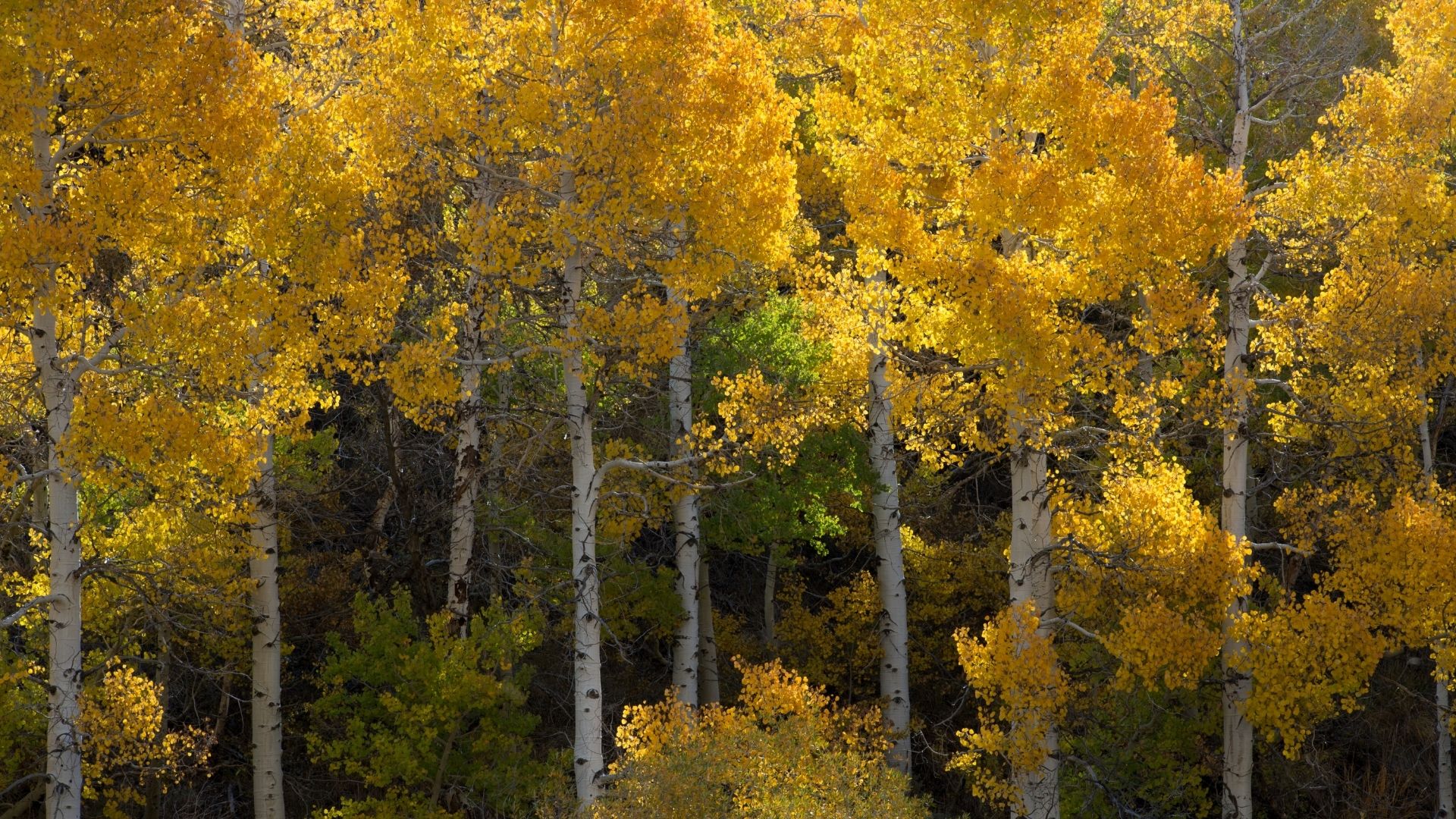
Yellow leaves get their color primarily from pigments known as xanthophylls.
Xanthophylls are present throughout the growing season, but they are usually hidden by green chlorophyll. As chlorophyll breaks down in autumn, their yellow color becomes visible.
These pigments are responsible for many of the bright lemon, yellow and gold tones seen in aspens, cottonwoods and willows.
The amount of pigment, condition of the leaf and surrounding weather all influence the final color. One tree may turn a bright, clear yellow while another develops warmer shades of gold.
What Makes Leaves Orange?
Orange color comes largely from carotenoids, including beta-carotene.
Carotenoids absorb blue and green light while reflecting yellow, orange and red wavelengths. Like xanthophylls, they are present in leaves during spring and summer but are usually hidden by chlorophyll.
When the green fades, carotenoids become visible. Leaves containing a strong concentration of these pigments may develop shades ranging from golden yellow to deep orange.
What Makes Leaves Red or Purple?
Red and purple fall colors come from pigments called anthocyanins.
Unlike carotenoids and xanthophylls, anthocyanins are not always present throughout the growing season. They may be produced in autumn when sugars become trapped inside the leaf as the abscission layer develops.
Sunlight and cool temperatures can support anthocyanin production. Depending on the concentration of pigment and the chemistry of the leaf, the result may be red, crimson or purple.
Anthocyanins may also help protect leaves from excessive sunlight, allowing the tree to recover additional nutrients before the leaves fall.
Why Do Leaves Turn Brown?
Brown leaves contain tannins and other compounds that remain after brighter pigments have faded.
Some leaves turn directly from green to brown. Others pass through yellow, orange or red before becoming brown. Dry weather, freezing temperatures, wind, disease and other forms of stress can affect this process.
Brown is also a natural part of the seasonal cycle. Once leaves fall, they decompose and return nutrients to the soil.
What Weather Produces the Best Fall Color?
Weather plays an important role in the timing, intensity and duration of fall color.
The most vivid displays often develop when autumn brings:
- Warm, sunny days
- Clear, cool nights
- Adequate moisture during the growing season
- Limited wind during peak color
- Temperatures that are cold but not severely freezing
Sunny days allow leaves to continue producing sugars. Cool nights slow the movement of those sugars out of the leaves, supporting the production of red and purple anthocyanins in species capable of producing them.
Freezing temperatures can damage leaves and shorten the display. Strong wind may remove leaves soon after they reach peak color. A calm period can allow colorful foliage to remain on the trees longer.
Weather is one reason fall color cannot be predicted by calendar date alone. Conditions vary each year and can differ between nearby canyons.
How Elevation Affects Fall Color
Elevation is one of the most important factors influencing fall-color timing in Inyo County.
Higher elevations generally experience colder nights and shorter growing seasons. As a result, high-elevation aspens often begin changing before trees in lower mountain canyons and the Owens Valley.
The season typically moves through four broad elevation zones:
- High-elevation lakes, meadows and trailheads
- Upper and middle mountain canyons
- Lower canyons and foothills
- Owens Valley waterways, communities and agricultural areas
This progression creates a longer viewing season. If leaves have fallen at a high-elevation lake, colorful trees may still be developing farther down the mountain.
Typical Inyo County Fall-Color Timeline
Exact timing changes each year, but the following windows provide a general planning guide.
Late September to Early October
Fall color generally begins around 9,000 feet and above.
Early locations may include:
- Horseshoe Meadows
- Onion Valley
- Upper Big Pine Canyon
- South Lake
- Weir Pond
- Lake Sabrina
- North Lake
These locations are also more exposed to freezing temperatures, wind and early snow.
Early to Mid-October
Color usually becomes more widespread between approximately 8,000 and 9,000 feet.
Middle-elevation groves along Bishop Creek, Big Pine Creek and Onion Valley Road may begin displaying shades of yellow, gold and orange.
Mid to Late October
The season generally moves into lower mountain canyons and foothill areas.
Lower portions of Bishop Creek Canyon, Big Pine Canyon, Onion Valley Road, Pine Creek Canyon, Round Valley and Lower Rock Creek Road may provide strong color during this period.
Late October into Early November
Cottonwoods and other deciduous trees on the Owens Valley floor generally change last.
Look for color along waterways, ponds, local roads, ranchlands and agricultural areas.
These dates are not guaranteed peak periods. Use them to understand the general movement of the season, then check current observations before traveling.
Why Eastern Sierra Fall Color Is Distinctive
Fall color in the Eastern Sierra generally appears in concentrated groves and ribbons rather than across uninterrupted forests.
Aspens gather around mountain streams, lakes and protected slopes. Willows trace waterways and wetlands. Cottonwoods grow throughout the Owens Valley and around lower-elevation communities.
These pockets of color stand out against evergreen forest, pale granite, open desert and clear autumn skies.
The region’s dramatic elevation range also makes it possible to experience several stages of autumn during one drive. Visitors may begin among green cottonwoods on the valley floor, encounter colorful trees in a middle canyon and arrive at a high-elevation grove where the leaves have already fallen.
How to Find Current Fall Color
Because timing changes with elevation and weather, current observations are more useful than relying on a fixed annual date.
The Visit Inyo Fall Color Tracker follows individual locations across Inyo County. Reports identify the stage of color at mountain lakes, campgrounds, canyon roads and lower-elevation destinations.
Common stages include:
- Still waiting: Leaves remain predominantly green.
- Just starting: A small amount of color is visible.
- Patchy: Noticeable color has developed, but many leaves remain green.
- Near peak: Most leaves have changed and strong color is present.
- Peak: The location is displaying its strongest seasonal color.
- Past peak: Many leaves have fallen or turned brown.
Check the tracker shortly before traveling. Wind, freezing temperatures and storms can change conditions quickly.
Planning an Eastern Sierra Fall-Color Trip
A flexible itinerary provides the best chance of finding color.
Begin by checking the fall-color tracker, weather forecasts and road conditions. Identify several destinations at different elevations rather than relying on one famous location.
If high-elevation leaves have fallen, move down the canyon. If lower-elevation trees remain green, explore a higher road.
Visitors can use Lone Pine, Independence, Big Pine and Bishop as bases for reaching fall-color destinations throughout Inyo County.
WHERE TO STAY IN INDEPENDENCE →
Frequently Asked Questions About Fall Color
What causes leaves to change color?
Shorter days and colder temperatures signal deciduous trees to prepare for winter. Chlorophyll production slows, revealing yellow and orange pigments. Some trees also produce red and purple anthocyanins.
Does cold weather make leaves change color?
Cooler temperatures contribute to the process, but shorter daylight is the primary seasonal signal. Clear, cool nights can support vivid color, while a hard freeze may damage leaves.
Why do higher elevations change first?
Higher elevations generally experience colder nighttime temperatures and shorter growing seasons. These conditions cause trees to begin preparing for winter sooner.
What makes aspen leaves turn yellow?
Aspen leaves contain yellow pigments known as xanthophylls. These pigments become visible after green chlorophyll begins breaking down.
Why are some fall seasons more colorful than others?
Temperature, sunlight, moisture, wind and the health of the trees all influence fall color. Warm sunny days, cool nights and limited wind can support a vivid, longer-lasting display.
How long does peak fall color last?
Peak color may last several days or longer under calm conditions. Strong wind, freezing temperatures or a storm can bring down leaves quickly.
When is fall color season in Inyo County?
The primary season generally runs from late September through October. Lower-elevation cottonwoods may remain colorful into early November.
Follow Fall Color Down the Mountain
Fall color is part of a tree’s annual preparation for winter. As chlorophyll disappears, yellow xanthophylls, orange carotenoids and red anthocyanins transform familiar green leaves.
In Inyo County, elevation turns that process into a moving season. High-elevation aspens change first, followed by trees in mountain canyons and, finally, cottonwoods across the Owens Valley.
Follow the elevation, check current conditions and remain flexible. If one location has passed its peak, another band of color may be waiting farther down the mountain.