Summary
Explore Big Pine fall colors along Glacier Lodge Road, from high-elevation aspens and mountain trails to Baker Creek and Owens Valley cottonwoods.
Fall arrives in layers around Big Pine. High in Big Pine Canyon, aspens begin changing as cold nights return to the Eastern Sierra. The season then moves down Glacier Lodge Road toward lower creek corridors, the community and the cottonwoods of the Owens Valley.
This range of elevations gives visitors several ways to experience Big Pine fall colors. A single day can include a scenic mountain drive, a short creekside walk, a high-elevation hike and expansive autumn views across the Owens Valley.
The primary route follows Glacier Lodge Road from Big Pine into Big Pine Canyon. Travelers can also explore lower Big Pine Creek, Baker Creek and the open landscapes surrounding town.
When to See Fall Colors in Big Pine
The primary fall-color season around Big Pine generally runs from late September through October. Cottonwoods at lower elevations may remain colorful into early November.
There is no single peak date for the entire area. Elevation, temperature, moisture, sunlight and wind determine when individual groves change and how long their leaves remain.
Late September to Early October: Upper Big Pine Canyon
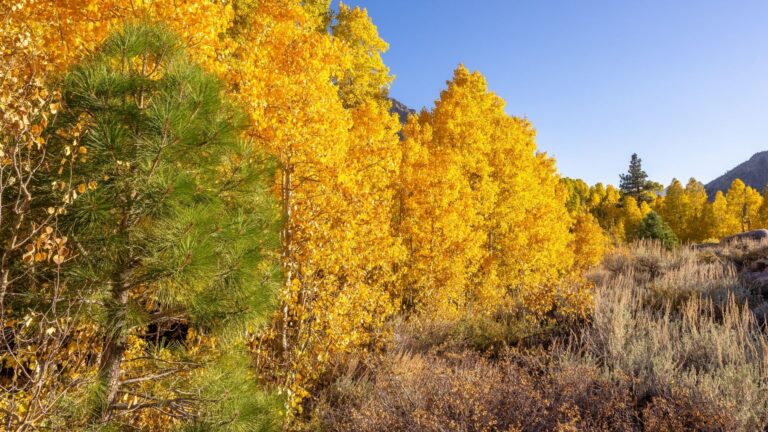
High-elevation aspens near the upper end of Glacier Lodge Road generally change first.
Cold nights can accelerate the transition, while strong wind or an early storm can quickly remove leaves from exposed trees. Visitors should check road and weather conditions before driving into the upper canyon.
Early to Mid-October: Middle Big Pine Canyon
As autumn continues, color usually becomes more widespread through the middle portions of Big Pine Canyon.
Aspens, willows and other creekside vegetation can create ribbons of yellow, gold and orange beside Big Pine Creek. Different groves may change at different times depending on their elevation and exposure.
Mid-October into Early November: Lower Canyon and Owens Valley
Lower Big Pine Creek, Baker Creek and cottonwoods around Big Pine generally change after the upper-canyon aspens.
If the leaves have fallen near the trailheads, continue looking farther down Glacier Lodge Road. Lower-elevation trees may still be green, beginning to change or approaching peak color.
Check the Visit Inyo Fall Color Tracker before traveling for current observations from Big Pine Canyon and the Owens Valley.
Driving Glacier Lodge Road
Glacier Lodge Road is the primary scenic fall-color route from Big Pine.
The road heads west from US 395 and follows Big Pine Creek into the Eastern Sierra. The landscape changes as it climbs, transitioning from the open Owens Valley to a narrower canyon surrounded by granite, evergreen forest and creekside vegetation.
Cottonwoods and willows are more common at lower elevations. Aspens become increasingly prominent farther up the canyon.
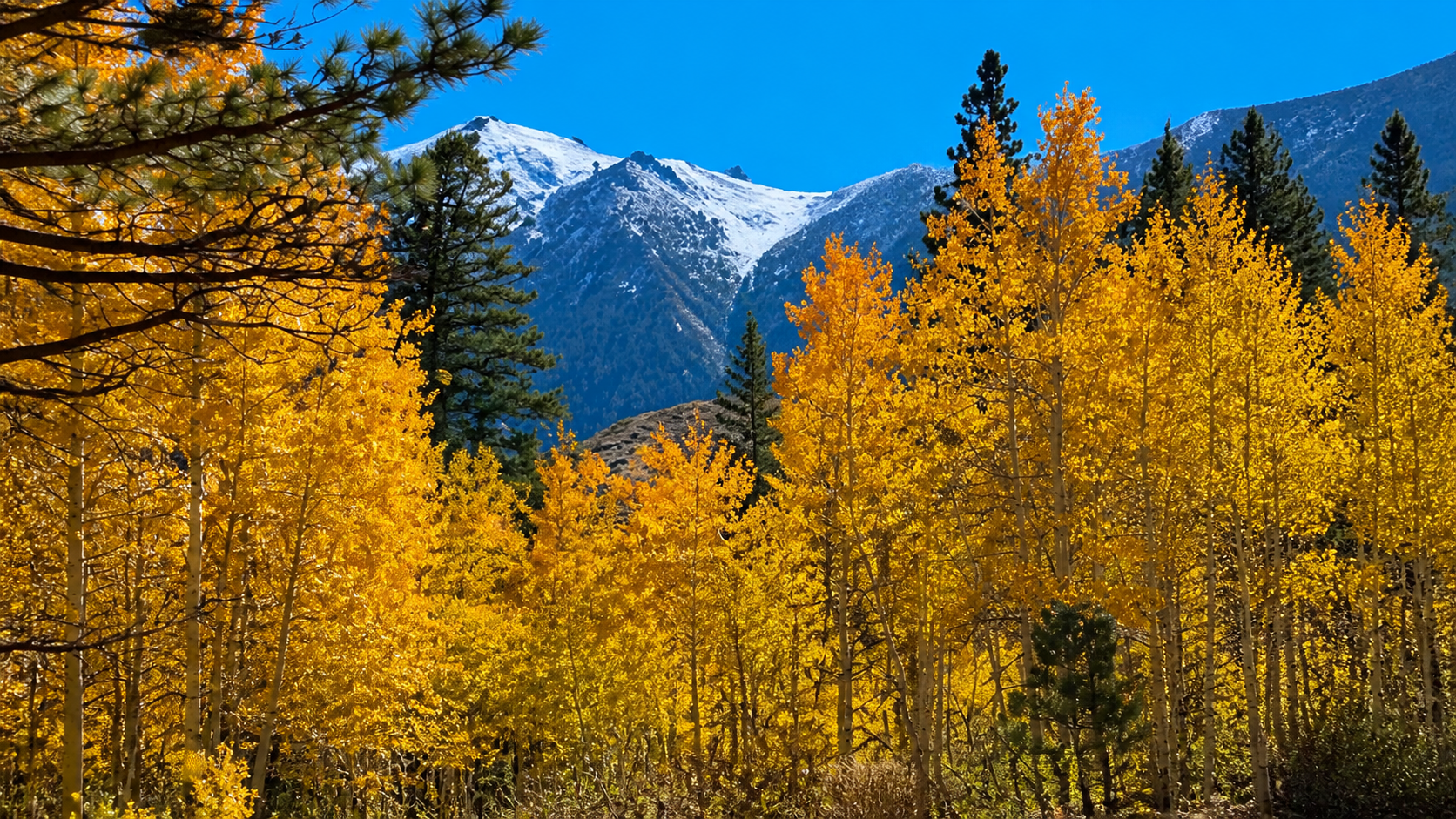
Color often appears in concentrated bands along the creek rather than covering entire mountainsides. This creates strong contrasts between bright leaves, dark evergreens and pale granite.
The road is paved but includes narrow and winding sections. Drive slowly, watch for cyclists and pedestrians, and stop only in established parking areas or pullouts.
Services are limited after leaving Big Pine. Begin with sufficient fuel and carry water, food, warm layers and an offline map.
Lower Big Pine Creek
Lower Big Pine Creek offers later-season color closer to the Owens Valley.
Cottonwoods and willows grow along the water, creating a leafy corridor through an otherwise dry landscape. These lower-elevation trees generally change after the aspens in upper Big Pine Canyon.
The creek can provide intimate autumn scenes, including reflections, moving water and backlit leaves. Early morning and late afternoon produce especially warm light, although visitors should be mindful of private property and established access boundaries.
Enjoy the scenery from public roads and designated recreation areas. Do not cross fences, enter private land or block access points.
Big Pine Canyon
As Glacier Lodge Road climbs, the canyon becomes narrower and more heavily forested.
Aspens gather near Big Pine Creek, campground areas and protected slopes. Their yellow and orange leaves stand out against evergreen trees and the surrounding granite.
Because the canyon contains different elevations and exposures, fall color can vary over a short distance. One grove may be approaching peak while another remains green.
This variation makes the drive itself part of the experience. Travel slowly and look beyond the largest roadside groves. Small clusters of aspens, creekside willows and individual colorful trees can create some of the most memorable views.
Campgrounds and other facilities may operate seasonally. Do not assume that water, restrooms or visitor services will be available late in autumn.
Upper Big Pine Canyon
Near the upper end of Glacier Lodge Road, visitors reach a high-elevation landscape and established trailheads serving the Big Pine Lakes area.
The upper canyon generally changes earlier than the lower road. Cold nights arrive sooner, and exposed leaves may fall quickly during windy weather.
Visitors do not need to complete a long hike to appreciate the scenery. A shorter walk near the trailhead can provide views of Big Pine Creek, changing vegetation and the surrounding mountains.
Parking can be limited during popular fall weekends. Use designated spaces and keep roads, trailheads and emergency access routes clear.
Fall Hiking Near Big Pine
Big Pine Canyon provides access to some of the Eastern Sierra’s most dramatic mountain trails.
The North Fork Big Pine Creek Trail leads toward the Big Pine Lakes and views of the Palisades. The complete route is a strenuous wilderness hike with significant elevation gain, but shorter sections can still provide creekside scenery and autumn color.
Fall hikers should prepare for:
- Shorter daylight hours
- Freezing morning temperatures
- Snow or ice at higher elevations
- Rapidly changing weather
- Limited mobile service
- The physical effects of high elevation
Begin early, carry sufficient water and food, and establish a conservative turnaround time. Wear appropriate footwear and bring warm layers even when conditions in Big Pine feel mild.
Stay on established trails and avoid cutting switchbacks. Wet meadows, creek banks and aspen roots can be easily damaged by foot traffic.
Baker Creek and Lower-Elevation Color
Baker Creek offers another place to look for autumn vegetation near Big Pine.
The creek supports cottonwoods, willows and other deciduous plants that contrast with the surrounding Owens Valley landscape. Because of its lower elevation, the area may change after upper Big Pine Canyon has passed its peak.
Baker Creek can be especially useful for visitors arriving later in October. The combination of colorful trees, open valley scenery and views toward the Eastern Sierra creates a quieter alternative to the upper canyon.
Use established public access points and respect nearby homes, campgrounds and private property.
Autumn Views Around Big Pine
Fall in Big Pine is not limited to aspen groves.
The Owens Valley provides expansive views in every direction. The Eastern Sierra rises to the west, while the White Mountains define the eastern horizon. Cottonwoods, agricultural land and open desert add seasonal color to the valley floor.
Cooler temperatures and clear autumn air create excellent conditions for scenic driving, walking and photography. Morning light illuminates the Eastern Sierra, while late-afternoon light brings warmth to the White Mountains.
Take time to explore the community and support local restaurants, stores and lodging properties during the trip.
Ancient Bristlecone Pine Forest
Big Pine is also a gateway to the Ancient Bristlecone Pine Forest in the White Mountains.
Bristlecone pines are evergreen, so the forest is not a traditional fall-color destination. Its appeal comes from the ancient trees, high-desert landscape and expansive views.
Autumn can bring clear skies and cooler daytime temperatures, but the forest sits at a high elevation. Freezing conditions, snow and road closures are possible.
The drive is long, steep and remote. Plan it as a separate excursion rather than a short addition to Glacier Lodge Road. Carry extra water, food, fuel and warm clothing, and confirm current access before leaving Big Pine.
Photographing Big Pine Fall Colors
The area offers opportunities for wide mountain landscapes and detailed creekside compositions.
Potential subjects include:
- Aspens framed by granite and evergreen trees
- Yellow leaves beside Big Pine Creek
- Reflections in calm sections of water
- Cottonwoods along lower Big Pine Creek
- Baker Creek vegetation
- Wide Owens Valley views
- Contrasting views of the Eastern Sierra and White Mountains
- Backlit leaves during early morning or late afternoon
A polarizing filter can reduce reflections and glare, but it is not essential. Safe positioning and thoughtful composition matter more than specialized equipment.
Pull completely off the road before taking photographs. Never stop in a travel lane or stand where drivers cannot see you.
Planning a Fall Day in Big Pine
Begin with a morning drive along Glacier Lodge Road.
Stop at established locations in lower and middle Big Pine Canyon before continuing toward the upper trailheads. Take a short walk or begin a longer hike if conditions, experience and daylight allow.
Return to Big Pine for lunch before exploring Baker Creek or lower Big Pine Creek. End the day with broad Owens Valley views as afternoon light reaches the surrounding mountains.
Travelers following a longer US 395 itinerary can continue north toward Bishop or south toward Independence and Lone Pine.
Responsible Leaf Peeping
Fall weekends can bring concentrated traffic to Glacier Lodge Road, trailheads and small roadside parking areas.
Help protect Big Pine Canyon by following these practices:
- Park only in established spaces and pullouts.
- Never stop in a traffic lane for a photograph.
- Keep campground entrances and emergency routes clear.
- Stay on established trails and durable surfaces.
- Do not walk through meadows or create paths into aspen groves.
- Pack out all trash, including food scraps and pet waste.
- Secure food and scented items in bear country.
- Keep pets under control and follow posted leash rules.
- Respect private property and cultural resources.
- Check applicable rules before operating a drone.
If a popular location is full, continue to another safe stop. Big Pine Canyon contains color at several elevations, and quieter areas may provide equally rewarding views.
Follow the Color Through Big Pine
The best way to experience Big Pine fall colors is to follow the season down the mountain.
Begin with the high-elevation aspens of upper Big Pine Canyon. As autumn advances, look for color along the middle sections of Glacier Lodge Road. Later in October, shift the focus toward lower Big Pine Creek, Baker Creek and the cottonwoods of the Owens Valley.
If one grove has lost its leaves, the season may not be over. Continue to a lower elevation and keep looking.
With its scenic mountain road, established trails, creekside groves and expansive valley views, Big Pine offers an autumn experience shaped by elevation, contrast and discovery.