Summary
Payahuunadü has been, and continues to be, the homeland of the Paiute (Nuumu), Shoshone (Newe), and Timbisha peoples. This land acknowledgment honors the original inhabitants of the Eastern Sierra and the tribes who remain here today.
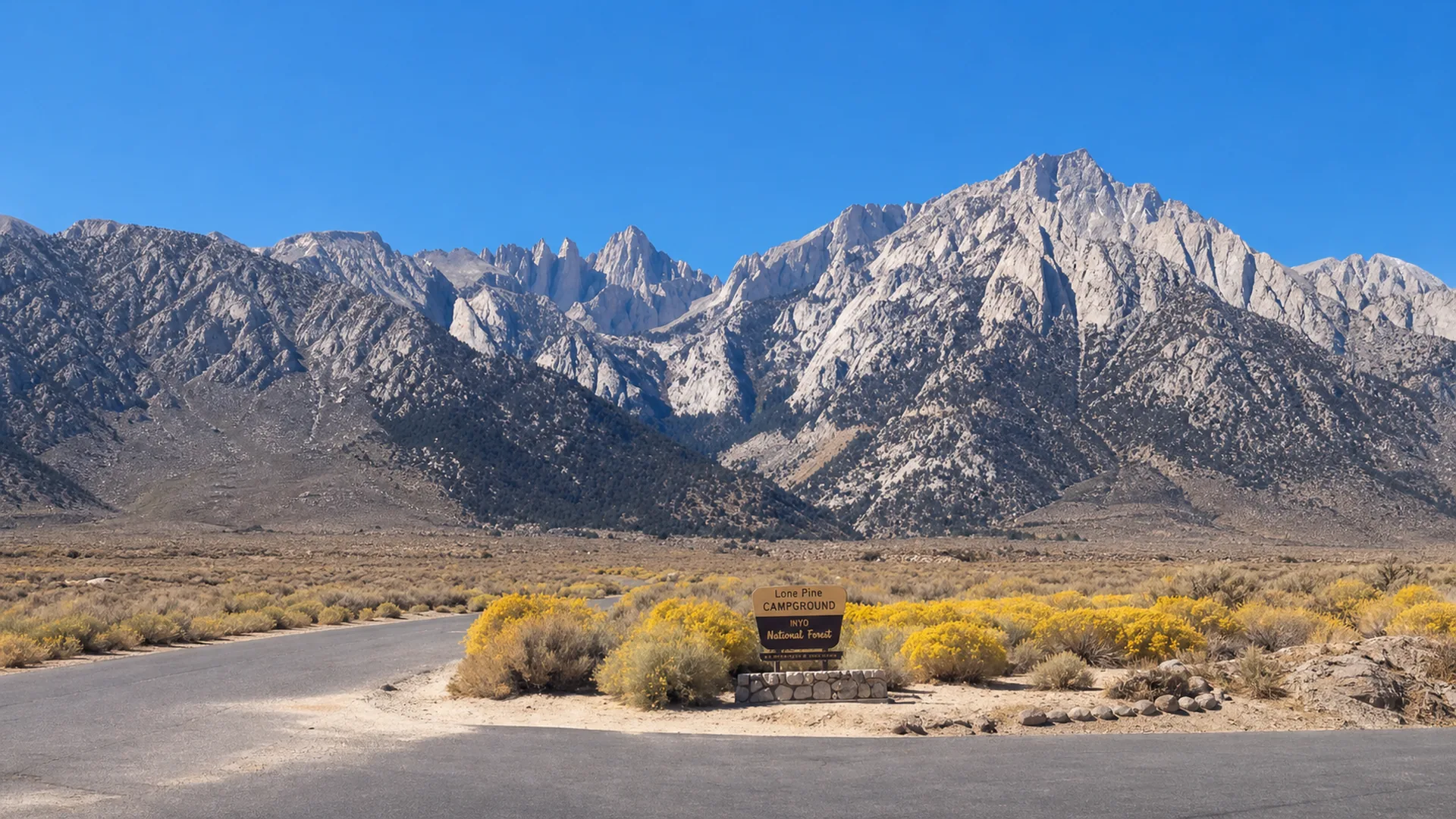
In Lone Pine, fall is defined by contrast. Golden foliage gathers along mountain creeks and high-elevation roads while the warm, rounded formations of the Alabama Hills rise from the desert below. Above it all, the steep eastern face of the Sierra creates one of California’s most dramatic autumn backdrops.
This meeting of alpine and desert landscapes makes Lone Pine an essential stop on an Eastern Sierra fall-color road trip. Visitors can follow the season from changing leaves in the mountains to wide-open views, natural arches and cinematic rock formations—all within a short drive of town.
When to See Fall Colors in Lone Pine
There is no single peak date for Lone Pine fall colors. Color generally begins at higher, colder elevations before moving toward lower canyons and the Owens Valley. Weather, wind and overnight temperatures can accelerate or shorten the season.
The best strategy is to check the current fall-color report before leaving home and remain flexible. A grove that is still green one week may be glowing gold the next, while an early windstorm can quickly strip leaves from exposed locations.
Bring layers even when the forecast in Lone Pine looks warm. Temperatures can change significantly as you climb from the valley floor into the Sierra.
The Alabama Hills in Fall
The Alabama Hills are not a traditional fall-color destination. Their appeal comes from the way the landscape frames the season.
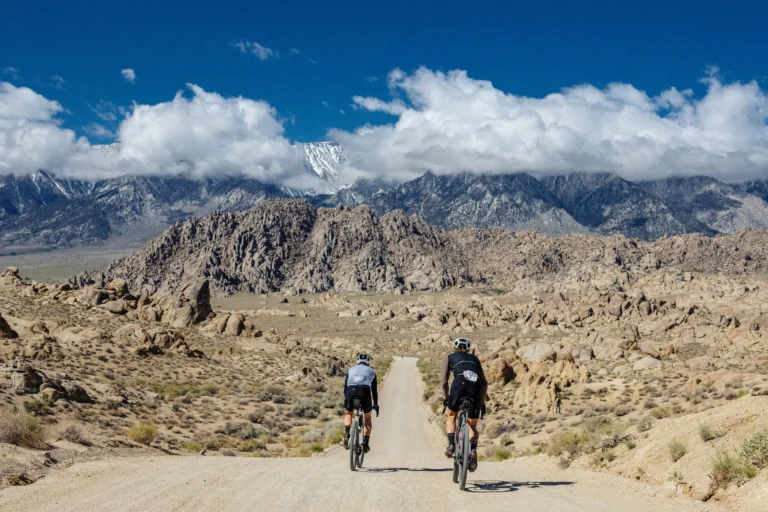
From Movie Road and other established routes, visitors can photograph golden vegetation against warm rock formations and the rugged Sierra crest. Early morning and late afternoon light add depth to the rounded boulders while emphasizing the elevation change between the desert floor and the mountains.
The Alabama Hills National Scenic Area lies west of Lone Pine and is managed by the Bureau of Land Management. Visitors come for photography, hiking, climbing, natural arches and the area’s extensive film history. More than 400 movies have used the Alabama Hills as a location. Bureau of Land Management
For a short walk, the Mobius Arch Loop provides a classic Alabama Hills experience and a memorable view toward the Sierra. Stay on established routes and durable surfaces to protect the area’s fragile desert vegetation.Whitney Portal Road
Hike from Whitney Portal to Lone Pine Lake
Whitney Portal Road begins in Lone Pine and climbs toward the base of Mount Whitney. The drive offers an impressive transition from open desert to pine forest, granite walls and creekside vegetation.
Look for pockets of fall color around drainages, campgrounds and areas protected from strong wind. Higher portions of the road can become cold or close seasonally, so check current road and weather conditions before traveling.
Use established turnouts, avoid stopping in the roadway and never block access for residents or emergency vehicles. If a viewing area is crowded, continue to the next safe pullout.
For an up-close fall-color experience, follow the Mount Whitney Trail from Whitney Portal toward Lone Pine Lake. Aspen groves along the route bring flashes of gold to the granite landscape, creating a striking contrast with the surrounding pines and High Sierra peaks.
The climb also offers changing views across Lone Pine, the Alabama Hills and Owens Valley. Conditions can shift quickly with elevation, so bring layers, carry water and check current trail and weather information before setting out.
Photographing Lone Pine Fall Colors
Lone Pine rewards both wide landscapes and close details.
Try photographing:
- Golden leaves framed against the Sierra crest
- Fall color reflected in moving creek water
- Warm Alabama Hills rock against distant autumn foliage
- Mount Whitney at sunrise or sunset
- Contrasting textures of leaves, granite and desert vegetation
- Highway 395 road-trip scenes with the mountains in the distance
A polarizing filter can reduce glare on leaves and water, but it is not essential. Morning and late-afternoon light will generally produce richer color and more dimensional mountain scenery than midday light.
Pull completely off the road before taking photographs. Never stop in traffic, walk onto private property or crush vegetation to reach a particular composition.
Recreate Responsibly
Fall weekends can bring concentrated visitation to small turnouts, trailheads and fragile public lands. Help protect Lone Pine by planning ahead and leaving each location as you found it.
- Use designated roads, parking areas and established trails.
- Pack out every piece of trash.
- Do not carve, paint or stack rocks.
- Keep dogs under control and collect pet waste.
- Avoid damaging vegetation for a photograph.
- Do not create new campsites or fire rings.
- Respect tribal lands, cultural resources and private property.
- Carry water and warm layers, even on short outings.
- Do not rely on consistent cellular service.
Camping in designated semi-primitive sites within the Alabama Hills requires a free permit. Camping remains first-come, first-served, and visitors must use areas marked for camping rather than creating new sites. BLM Alabama Hills visitor information
Plan Your Lone Pine Fall Trip
Lone Pine brings together landscapes that feel worlds apart: high alpine peaks, golden creek corridors, historic Highway 395 and the sculpted desert of the Alabama Hills.
Spend time at several elevations, check conditions before setting out and allow room for discovery. In this part of the Eastern Sierra, the journey between the fall-color groves can be every bit as memorable as the color itself.